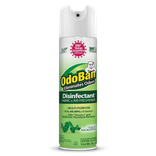
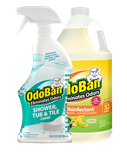
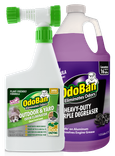















Formulated in partnership with the EPA.
Low VOC, Alkylphenol-free, Phthalate-free Formulas
When you see the DfE logo on a product, what does it mean?
It means that the DfE review team has screened each ingredient in the product for potential human health and environmental effects. The product contains only those ingredients that pose the least concern among chemicals in their class.
Earth Choice Product Line
Earth Choice products are designed to assist you in the implementation of an Environmentally Preferable Purchasing (EPP) cleaning products program. The program provides an overall best value, taking into account price, regulatory requirements, performance, environmental and human health impact.
Through partnership with the USEPA Design for the Environment (DfE) - Formulator Initiative, Clean Control Corporation has worked for the past several years to reformulate many of our products with a more positive environmental and human health profile. Our partnership also enables us to help companies implement an EPP cleaning products program.
The USEPA DfE - Formulator Initiative program encourages and assists formulators in designing products with more positive environmental and health profiles than conventional products. DfE provides formulators with information on chemical characteristics and toxicities of raw materials and additives. Through this effort, Clean Control Corporation has been able to provide environmentally preferable products for maintaining attractive and healthful conditions in the home and workplace. For more information, visit http://www.epa.gov/opptintr/dfe/pubs/projects/formulat/formpart.htm.
Environmentally
Preferable Purchasing
Did you know environmentally preferable purchasing is becoming commonplace in many governmental and institutional organizations?
Proper sanitation and cleaning are important for a healthy building environment. Some cleaning products, however, can contain harmful chemicals that contaminate the environment and endanger human health. Implementing "green cleaning" practices can reduce these health, safety and environmental risks. Green cleaning involves selecting alternative products, using those products properly and taking other steps to reduce risks while maintaining a satisfactory level of cleanliness and disinfection.
Consider these attributes when deciding which cleaners and degreasers to purchase: safety, price and performance. Select products that maximize beneficial environmental attributes (such as biodegradability, recycled content and energy efficiency) minimize adverse environmental and human health effects (such as cancer-causing materials) as long as they remain consistent with traditional purchasing factors.
Remember, environmentally preferable purchasing is a process; not an outcome. Consequently, no product or set of products, including biobased, energy or water efficient or recycled-content products, will be environmentally preferable in every situation.
For more information, see the Environmentally Preferable Purchasing Website Training Tools located at http://www.epa.gov/epp/ and the Florida Green Lodging Certification Program at http://www.dep.state.fl.us/waste/categories/recycling/GreenLodging/.
Benefits of Buying Green
Approximately 5 billion pounds of chemicals are consumed in the United States each year to clean and maintain institutional and commercial buildings. Carefully selecting cleaning products according to an Environmentally Preferable Purchasing (EPP) strategy and implementation of green practices can positively impact the environment and promote improved indoor air quality in institutional and commercial buildings. EPP is an important opportunity especially for environments with sensitive populations (i.e. young children,
asthmatics and those with chemical sensitivities). Unfortunately, cleaning products regularly used in these environments can actually contribute to the problem.
Cleaners regularly used on a variety of surfaces indoors include: glass cleaners, general-purpose cleaners, bathroom cleaners, floor cleaners, upholstery cleaners and carpet cleaners. When selecting these high volume items, purchasers should be confident that the product meets health, environmental and performance requirements.
Removal of dust and allergens are crucial to maintaining a healthy indoor environment. Also, choosing Earth Choice products can reduce health and environmental concerns associated with concentrated forms of some commercial cleaning products that are classified as hazardous, creating potential handling, storage and disposal issues for users.
Using less hazardous products with positive environmental attributes (e.g., biodegradability, low toxicity, low volatile organic compound (VOC) content) and taking steps to reduce exposure can minimize harmful impacts to custodial workers and building occupants, improve indoor air quality, and reduce water and ambient air pollution while also ensuring the effectiveness of cleaning.
Buying cleaners in concentrates with appropriate handling safeguards and reusable, reduced, or recyclable packaging, reduces packaging waste and transportation energy. Buying less hazardous cleaners may reduce costs when it comes time to properly dispose of any leftover cleaners.
By using certified green products, it is much easier to develop a cleaning program that improves the health and environmental performance of cleaning products and practices. For more information, see http://www.chps.net/manual/documents/M&OManual.pdf.
Indoor Air Quality
Did you know cleaning chemicals actually contribute to the indoor air burden and associated health problems? Volatile organic compounds (including solvents and fragrances) in cleaning products have been shown to influence exposures to indoor-generated particles resulting in a 10-fold increase in fine particles into the indoor environment. Such particles, if toxic, would represent an increased health risk due to ambient indoor air pollution. Therefore, carpet and upholstery cleaners that are intended to reduce the potential for
particle resuspension indoors should contain a minimum quantity of fragrances.
Airborne particles such as dirt and dust frequently trigger asthma and other breathing problems. Particulate removal efficacy for vacuums and carpet extraction cleaners is an important consideration. Using performance certified products can result in dramatic improvements in IAQ. It is important to recognize that growth of fungi and other microorganisms cannot occur in carpet or on any other surface without a nutrient source and water. Moisture is essential to microbial growth. Soil, in addition to the critical supply of moisture, is necessary to provide the food for fungal growth.
Vacuum carpets at least once a week, using a well-functioning vacuum cleaner that has adjustable brushes, and bears the Carpet and Rug Institute's Vacuum Cleaner Indoor Air Quality (IAQ) Testing Program green label. Dust hard surfaces frequently. Routinely clean carpets using a hot water extraction process that efficiently removes embedded soils and limits the amount of moisture remaining in the carpet.
For more information, see USEPA Air Quality Criteria for Particulate Matter - October 2004: http://cfpub.epa.gov/ncea/cfm/recordisplay.cfm?deid=87903.
Did you know bacteria in household dust might trigger asthma symptoms? The simple principle of keeping materials "clean and dry" applies to all products and surfaces. To reduce cross contamination, use proper hand washing techniques and routinely disinfect hard surfaces in public areas such as restrooms and wash hands frequently when handling food.
Often environmentally preferable cleaning products are more neutral pH, and contain milder surfactants. This attribute often lends itself to cleaners that contain bio-contamination. Manufacturers of cleaning products must establish and maintain a microbiological quality program in which microbiological aspects are considered to assure acceptable finished product quality.
A recent study conducted using samples from The National Survey of Lead and Allergens in Housing (NSLAH) found that bacteria lurking in household dust produce chemicals that may trigger asthma and asthma-related symptoms such as wheezing. These bacterial chemicals, called endotoxins, particularly those found on bedroom floors, were linked with increased respiratory problems in adults. Endotoxins are found in the cell wall of bacteria and are only released when bacteria ruptures or disintegrates. Because bacteria can be found everywhere in the home, the likelihood of their release is high. Once released, endotoxins can cause inflammation of the airways and lead to asthma symptoms.
This study, supported by the National Institute of Environmental Health Sciences (NIEHS), a part of the National Institutes of Health, is the first nationwide study of endotoxins in the household environment, and it involved analysis of more than 2,500 dust samples from 831 homes across the United States. Researchers at NIEHS and the University of Iowa found a strong association between endotoxin levels and the prevalence of diagnosed asthma, asthma symptoms, asthma medication use, and wheezing. These relationships were strongest for bedroom floor and bedding dust. Rooms with higher endotoxin concentrations experienced higher prevalence of asthma-related symptoms. For more information, see http://www.niehs.nih.gov/airborne.
Biodegradability & Toxicity
Did you know many cleaners contain ingredients that biodegrade to compounds that
are more aquatically toxic than the parent, persist in the environment and may disrupt
endocrine systems (responsible for metabolism, reproduction and growth). Concentrated
chlorine is very caustic and volatile and may react with other compounds, posing a risk to workers, and if released to the environment is toxic to aquatic organisms.
Earth Choice products only use surfactants that biodegrade readily to non-polluting substances, which helps relieve stress on the environment, especially threats to aquatic life.
Also, by not including caustics, chlorine and harmful solvents and sequestrants in these products, Earth Choice products further enhance their environment-friendly profile and safety characteristics. For example, an inorganic phosphate-free formula may promote a better balance of nutrients in the environment and healthier fresh water bodies. Safer sequestrants biodegrade readily to non-hazardous compounds and protect against environmental loading of metals. Mild pH formulas help protect workers, the environment and building infrastructure.
Cleaners as used should not contain more than 0.5% by weight of total phosphorus to prevent eutrophication problems in wastewater treatment systems.
For more information, USEPA Safer Detergents Stewardship Initiative (SDSI): http://www.epa.gov/dfe/pubs/projects/formulat/sdsi.htm
Possible Endocrine Disruptors - alkyl phenol, phthalates
Did you know that many cleaners contain chemicals
may result in disruption of endocrine systems in human and wildlife populations?
Alkylphenols and their ethoxylates are widely used in liquid detergents and as wetting agents in a variety of industrial and consumer applications. There is concern that these chemicals and their breakdown products can produce hormone-modulating effects. It is not clear if any of these are adverse effects or if they are occurring in high enough quantities to create a need for concern.
Phthalates are widely used in fragrances and cosmetics. There is concern that the use of phthalates could affect humans, particularly if used in toys for small children or in medical equipment, although many researchers have concluded that human exposure to phthalates is not environmentally relevant. Several bans have already been initiated in Europe on some phthalates in children's toys, and the FDA is considering regulating the use of some phthalates in some types of medical devices in the US.
For more information, see USEPA Endocrine Disruptors Research Initiative: http://www.epa.gov/endocrine/.
Renewable Resources & Recycling
Biobased Products
Did you know biobased ingredients are commercial or industrial products (other than food or feed) that are composed in whole or in significant part of biological products or renewable domestic agricultural materials (including plant, animal and marine materials) or forestry materials?
Biobased products are certainly a good starting point for environmental purchasing considerations. Because these products use renewable resources, one of the positive environmental attributes identified by EPA, some people consider them environmentally preferable. Clean Control Corporation has worked to reformulate many of our Earth Choice products using ingredients based on renewable resources such as corn, soybean and coconut (i.e. ethanol, soy ester and dodecyl glucoside).
Federal agencies are required to develop affirmative procurement programs for purchasing the USDA-designated products. The Task Force recommends that agencies expand their recycled content product affirmative procurement programs to include biobased products.
For more information, see the office of the green purchasing and biobased initiatives of the Federal Environmental Executive: http://www.ofee.gov/gp/bioprod.html and the USDA http://www.biobased.oce.usda.gov.
Reduced/Recycled Packaging
Did you know the use of concentrates reduces the environmental impact of cleaners by reducing the amount of packaging materials needed, which require further processing when sent to local recycling facilities or landfills?
Packaging is a large component of municipal solid waste landfills. A product's packaging can account for a significant portion of the product's contribution to municipal solid waste. EPA's recommended approach to managing solid waste is, first, reduce packaging of products and, second, recycle packaging materials.
Concentrates are defined as products that are diluted by at least eight parts by volume water (1:8 dilution ratio) prior to its intended use. Products that are diluted to 16 oz per gallon or less meet this criterion.

Minimizes Exposure to Concentrates: Although packaging a product in concentrated form may result in reduced packaging, it raises the potential that the end users of the product will be exposed to the concentrate, which may place the end user at greater health risk than exposure to the ready-to-use product.
Microfiber Cloths
Did you know that use of microfiber cloths reduces chemical use and disposal, decreases cleaning times for customer rooms, and reduces injuries and workers compensation claims.
For more information, see: http://www.epa.gov/region09/cross_pr/p2/projects/hospital/mops.pdf JCAHO/USEPA Environmental Best Practices for Health Care Facilities report "Using Microfiber Mops in Hospitals".
Hazardous Waste
Earth Choice products are not hazardous as defined by 40CFR261.

Ignitability (40CFR261.21)
Corrosivity (40CFR261.22)
Reactivity (40CFR261.23)
Toxicity (40CFR261.24)